Women voices and Nigeria’s fight for Inclusive Development
In a renewed push to spotlight the critical role of women in shaping Nigeria’s development agenda, a new podcast titled
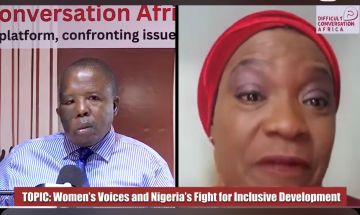
Women’s Voices and Nigeria’s Fight for Inclusive Development has been released to amplify women-led perspectives on equity, justice, and sustainable national growth by Difficult Conversation Africa Podcast, a development focused podcast platform
The podcast emerges at a time when Nigeria continues to grapple with deep-rooted inequalities across gender, disability, class, and geography challenges that experts say cannot be addressed without intentionally centring women’s voices. From policymaking spaces to grassroots advocacy, women remain at the forefront of social change, yet their contributions are often underrepresented in national conversations.
Toun Okewale-Sonaiya, the guest on the “Women’s Voices and Nigeria’s Fight for Inclusive Development podcast shared lived experiences and practical insights on building a more inclusive Nigeria. Special attention is given to voices that are frequently marginalised, including women with disabilities, rural women, and young women leaders.
The in-depth interviews and evidence-based discussions, covers how gender, disability, and socio-economic status intersect to shape development outcomes in critical sectors such as education, health, governance, economic empowerment, and social protection. It also interrogates the gap between policy commitments and real-life implementation, highlighting pathways for accountability and systemic change.
Yinka Olaito, the podcast host said , the podcast is designed not only to inform but to influence. By bringing together diverse perspectives, it seeks to challenge dominant narratives, elevate underreported stories, and reframe inclusive development as a national imperative rather than a niche concern.
The interview with Toun Okewale Sonaiya targets a broad audience, including development and humanitarian professionals, policymakers, students and researchers, journalists, donors, private-sector leaders, and members of the public interested in gender equality and social inclusion. It also calls on men and allies to engage meaningfully in conversations on inclusive development.
Listeners can expect to gain deeper insight into Nigeria’s development challenges from those most affected, learn from women driving impact across sectors, and explore practical solutions that promote equity and participation for all. Beyond awareness, the podcast aims to inspire action, collaboration, and more inclusive leadership across Nigeria’s development ecosystem.
As Nigeria seeks sustainable pathways to growth,
Women’s Voices and Nigeria’s Fight for Inclusive Development positions women are indispensable architects of the nation’s future.
This podcast is not just about women—it is about transforming systems, shifting narratives, and reimagining development through inclusion, justice, and accountability.
Who Should Listen
This podcast is designed for a wide and diverse audience, including:
–Women leaders and emerging changemakers across civil society, business, media, and politics
–Development practitioners and humanitarian actors working on gender, disability, health, education, governance, and social inclusion
–Policymakers, government officials, and legislators shaping development and social protection policies
–Students, researchers, and academics in development studies, gender studies, public policy, and social sciences
–Journalists, communicators, and storytellers interested in gender-responsive and inclusive reporting
-Men and allies committed to gender equality and inclusive national development
–Donors, foundations, and private-sector leaders seeking grounded perspectives on inclusive impact in Nigeria
Benefits to Listeners
Listeners will:
-Gain deep insights into Nigeria’s inclusive development challenges and opportunities through women’s lived experiences
–Hear diverse, underrepresented perspectives, including those of women with disabilities and women from marginalized communities
–Understand how policies affect real lives, and why inclusive approaches are essential for sustainable development
-Learn practical strategies and lessons from women leading change at grassroots, national, and international levels
-Be inspired to act, advocate, collaborate, and lead more inclusively within their own spaces
–Develop a more nuanced, intersectional understanding of gender, disability, and development in Nigeria
- manuels
- January 8, 2026
- 0 COMMENTS
- 90 views


Leave a comment